
The moment you spot extra strands on your pillow or see hair gathering near the shower drain, an unspoken worry sets in. You run your fingers through damp hair, trying to recall when it began to feel less full. The concern is quiet but persistent, often kept hidden from others, yet impossible to ignore within yourself. Stress, changing seasons, new hair products, or tight hairstyles are easy explanations to reach for. They feel less unsettling than acknowledging that deeper changes may be taking place beneath the scalp.
Understanding the Signals Your Hair Sends
Hair communicates in subtle ways, reflecting late nights, missed meals, hurried routines, tight styling habits, harsh products, and prolonged stress. It also mirrors hormonal shifts, seasonal changes, and the gradual effects of time. Well before hair fall becomes alarming, the body sends gentle cues asking for rest, nourishment, and more thoughtful care. Busy lifestyles often cause these signs to be overlooked. When shedding increases, many turn to instant solutions, yet a calmer and more supportive approach exists through home-based remedies that work in harmony with the body.
Oil Treatments: Nourishing Hair from Root to Tip
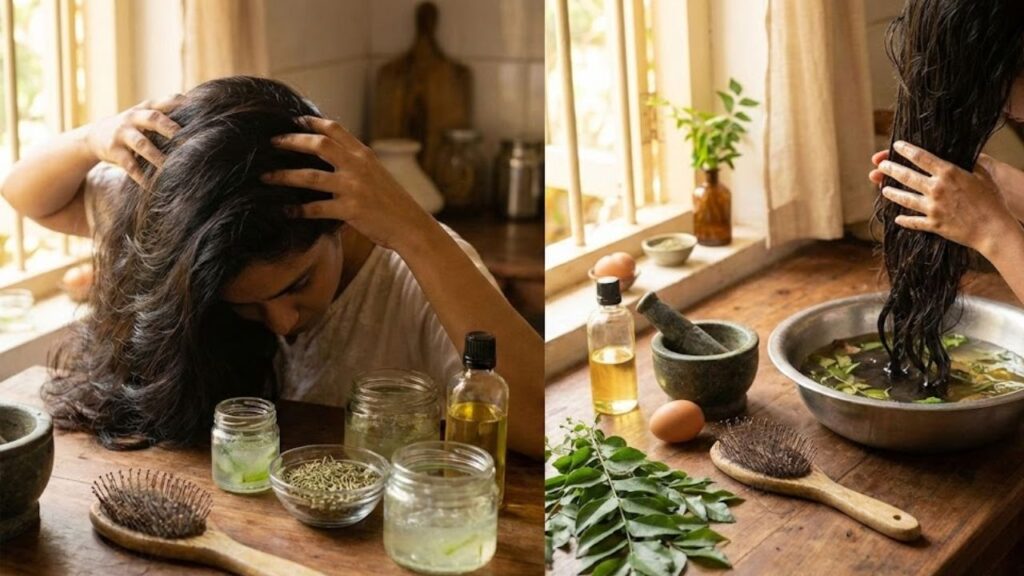
Hair oiling is a long-standing practice built on patience and consistency. Warming oil between the palms and massaging it into the scalp does more than improve texture—it supports circulation and relaxation. Coconut oil is known to reduce protein loss and shield dry, fragile strands. Castor oil, heavier in consistency, is typically used in small amounts to maintain scalp moisture. Almond, sesame, and olive oils each offer unique benefits. There is no universal choice; blended oils often deliver better results. Regular oiling combined with gentle massage helps nourish the scalp and reinforce hair roots.

Scalp Massage: A Simple Step Often Ignored
The massage itself is just as vital as the oil used. Applying light pressure with fingertips in slow, circular movements stimulates blood flow, allowing oxygen and nutrients to reach the hair follicles more effectively. Beginning at the hairline and gradually moving backward gently activates the scalp. Spending just five to ten minutes a few times each week can lead to visible improvement. Beyond physical benefits, this practice encourages relaxation, easing tension and stress that silently contribute to ongoing hair shedding.

Herbal Oils and Natural Infusions at Home
For those drawn to a more mindful routine, preparing herb-infused oils at home adds depth to hair care. Common additions include rosemary, curry leaves, hibiscus, and fenugreek. Slowly warming these herbs in oil and allowing them to steep helps release their natural properties. Rosemary is often associated with enhanced circulation, while hibiscus and fenugreek contribute to conditioning and strength. The process requires time and care, resulting in a personalized oil that feels both grounding and deeply nourishing.