
It’s early, maybe just after sunrise. You swing your legs off the bed and pause for a second longer than you used to. The floor feels a little farther away now. Not dangerous—just different. You notice how you steady yourself before standing, how your hand instinctively reaches for the edge of the mattress.
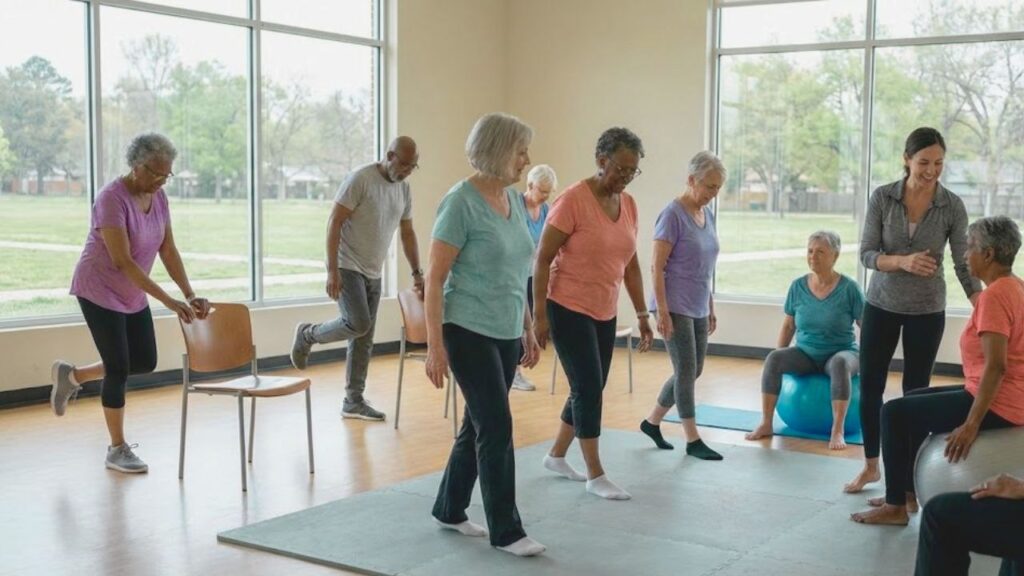
Later in the day, it happens again. You turn too quickly in the kitchen, or step off a curb, and there’s a brief moment where your body has to catch up with your intention. Nothing dramatic. Just a subtle reminder that balance is no longer something you take for granted.

These moments are quiet. Easy to dismiss. But they’re also deeply human, especially after 50 or 60, when the body starts asking for a little more attention—not urgency, just awareness.

When the world feels slightly out of sync
Many people describe it as feeling a half-step behind life. You know where you want to go, but your body hesitates. The ground feels less predictable. Crowded places feel faster. Even familiar routines carry a faint sense of caution.
This isn’t weakness. It’s not failure. It’s a shift in how your body gathers information from the world. Balance, it turns out, isn’t a single ability. It’s a quiet conversation between your muscles, your eyes, your inner ear, and your attention.
When that conversation changes, you feel it as uncertainty. As carefulness. As the instinct to hold the railing, even when you never needed it before.
What balance really means as you age
We often think of balance as standing on one leg or not falling over. But balance is mostly about tiny, constant adjustments. It’s your body making thousands of small corrections without asking for your permission.
Over time, a few things naturally shift. Muscles don’t respond as quickly. Sensation in the feet can dull slightly. Reaction time softens. None of this is dramatic on its own, but together, it changes how steady you feel.
This is why balance exercises for seniors aren’t about proving strength. They’re about reminding the body how to listen again. How to trust itself in motion.
A small, familiar story
Ramesh, 67, noticed it while gardening. He had been kneeling, pulling weeds, when he stood up and felt a brief wave of unsteadiness. It passed quickly, but it stayed with him. Not as fear—more as curiosity.
“I realized,” he said later, “that I rush myself. My mind is already standing, but my body needs a moment.”
That awareness changed how he moved. Not by adding intensity, but by adding patience.
What’s happening inside, in plain language
Your sense of balance relies on messages traveling back and forth inside you. The feet send information about the ground. The eyes report where you are in space. The inner ear tracks movement. The brain blends it all together.
As the years pass, those messages can arrive a little slower or less clearly. The body still knows what to do, but it appreciates repetition and reassurance. This is where gentle balance exercises come in—not as training, but as reminders.
They help the body practice steadiness in safe, simple ways, so everyday movements feel more familiar again.
Balance exercises as quiet conversations with the body
When people hear “11 balance exercises for seniors,” they sometimes imagine a rigid routine. But balance work doesn’t need to feel formal. Many of the most effective movements are small, almost ordinary.
Standing near a counter and shifting your weight. Rising slowly from a chair without using your hands. Turning your head while standing still. These actions gently wake up the systems that keep you upright.

The goal isn’t perfection. It’s familiarity. Each repetition tells your body, “This is safe. We’ve done this before.”
Gentle, realistic ways to support balance
- Taking a brief pause before standing up, letting your body catch up with your intention
- Practicing standing on one leg while holding a chair or wall for reassurance
- Walking heel-to-toe in a quiet hallway, slowly and without rushing
- Turning your head gently while standing to reconnect balance and vision
- Doing simple movements barefoot at home to improve awareness in your feet
- Using everyday moments, like brushing teeth, to practice steady standing
Why consistency matters more than effort
Balance responds best to regular, low-pressure attention. A few minutes most days does more than an intense session once a week. This is because the body learns through repetition, not force.
For many seniors, balance improves not because they “worked harder,” but because they stopped rushing. They allowed movements to unfold at their own pace.
In that space, confidence quietly returns.
A lived-in reflection
“I’m not trying to move like I did at forty. I’m learning how to move like myself now—and that feels steadier than I expected.”
Reducing fall risk without living in fear
Talking about fall risk can feel heavy, but it doesn’t have to be. Falls aren’t about clumsiness or age alone. They often happen when the body is surprised.
Balance exercises reduce that element of surprise. They make movements feel known again. Familiar. Practiced.
This isn’t about watching every step. It’s about trusting your body to respond when something unexpected happens.
Letting balance be part of daily life
The most sustainable balance practices blend into ordinary days. Standing on one foot while waiting for the kettle. Rising from a chair slowly and with awareness. Walking with attention instead of speed.
These moments don’t demand discipline. They invite presence.
Over time, they change how you feel in your body—not younger, but more at home.
Acceptance over correction
Balance after 60 isn’t about fixing something that’s broken. It’s about understanding what’s changing and meeting it with kindness.
Your body is not failing you. It’s communicating differently now. When you listen—through gentle balance exercises, through patience, through respect—it responds.
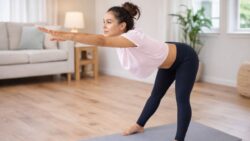
Stability becomes less about control and more about relationship. And that shift, for many people, feels like relief.
Key ideas at a glance
| Key point | Detail | Value for the reader |
|---|---|---|
| Balance changes with age | Slower responses and softer feedback from the body are normal | Reduces self-blame and worry |
| Gentle practice helps | Simple, regular movements rebuild familiarity | Improves confidence in daily activities |
| Consistency matters most | Small efforts done often are more effective than intensity | Makes balance work feel achievable |
| Acceptance supports stability | Understanding the body’s rhythm reduces tension | Encourages calm, steady movement |
