
It’s usually around early evening, when the light in the room starts to soften, that you notice it. You stand up from the chair, or shift your weight from one foot to the other, and there’s a familiar tightness in your hips. Not sharp pain. Just a quiet resistance. As if your lower body is holding onto the whole day a little longer than you expected.
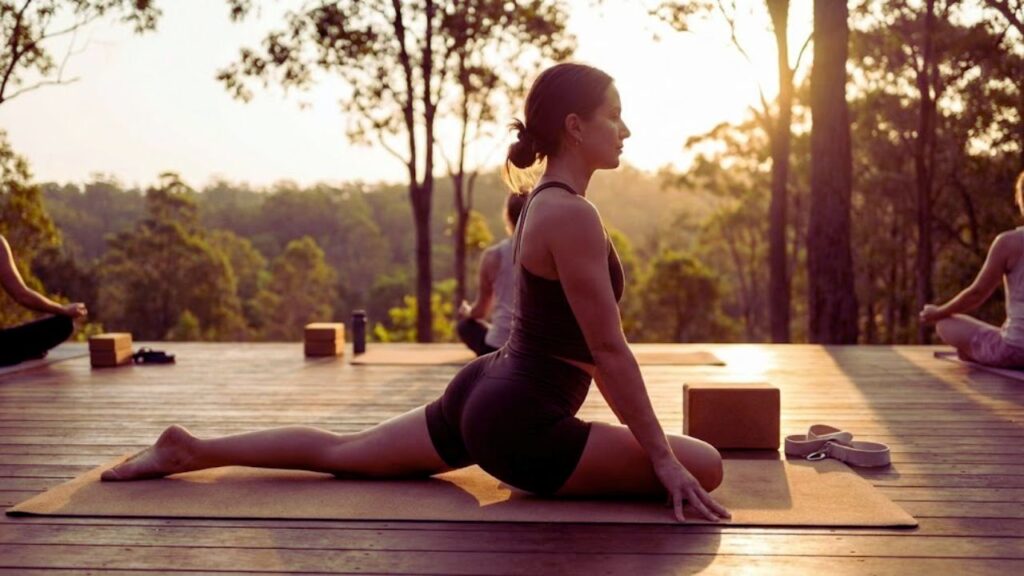
You might pause there for a second. Maybe stretch without thinking. Maybe sigh. This is not new, and yet it feels different now than it did years ago. The body doesn’t bounce back as quickly in the evening. It asks to be listened to instead.

There’s something about this time of day — after responsibilities have been carried, after movement has been limited to chairs, cars, or standing in one place — when the hips begin to speak up. Not loudly. Just enough to be noticed.

When Your Body Feels Slightly Out of Step
You may have felt this sense of being a little out of sync with yourself. The mind feels ready to slow down, but the body feels stiff. Or the opposite — you’re mentally tired, but your legs feel restless and heavy at the same time.
Hips often become the quiet meeting place for all of this. They are involved in walking, sitting, standing, turning, even breathing more deeply. Over time, they also become a storage space — not just for physical tension, but for long hours of stillness, habitual postures, and the emotional weight of the day.
As the years go on, you may notice that this tightness doesn’t disappear overnight anymore. It lingers into the evening, sometimes into the next morning. Not because something is wrong, but because the body’s rhythms have changed.
Why Evenings Feel Different in the Hips
The idea behind gentle evening yoga for the hips isn’t about fixing anything. It’s about acknowledging timing.
As we age, muscles and connective tissues naturally lose a bit of their spring. Blood flow slows slightly at rest. Joints that once moved freely with little thought now respond better to warmth, patience, and repetition. The hips, sitting deep in the body, feel all of this more clearly by evening.
Lower-body tension also has a habit of building quietly throughout the day. Each hour of sitting shortens certain muscles. Each small imbalance — one hip bearing more weight than the other, one leg crossed out of habit — adds up. By evening, the body simply asks for a different kind of attention.
The Role of Gentle Evening Yoga
Evening yoga, especially when it focuses on the hips, works less by effort and more by permission. The movements are slower. The shapes are simpler. The intention is not to stretch as far as possible, but to let the body soften where it can.
These kinds of poses invite the nervous system to settle. When the body senses safety and slowness, muscles are more willing to release. Not all at once. Just enough.
This is why evening practices often feel surprisingly emotional. The hips are close to the center of balance and stability. When they begin to loosen, people often report feeling lighter, steadier, or simply more at ease.
A Real Moment from Someone Else’s Evening
Rita, 62, noticed that her hips felt stiffest not during the day, but right after dinner. “I’d sit down to watch something,” she said, “and when I stood up again, I felt like I was older than I am.”
She didn’t want a workout. She didn’t want a routine that felt demanding. What helped her was a short, familiar sequence she returned to most evenings — four simple yoga poses that felt more like unwinding than exercising.
She described it as “giving my legs permission to stop holding everything up.”
What’s Happening Inside the Body
When hips feel tight in the evening, it’s often because the muscles around them have been working without rest. Some have been shortened by sitting. Others have been overused to keep you upright and balanced.
The body also becomes more sensitive to discomfort later in the day. Energy is lower. Small sensations feel bigger. Tightness that was ignored earlier becomes noticeable.

Gentle yoga poses help by slowly increasing circulation, encouraging the joints to move through comfortable ranges, and signaling to the nervous system that it’s safe to let go. There’s no forcing involved. The release happens because the body finally feels supported.
Four Evening Yoga Poses That Invite Release
These poses are often practiced slowly, with pauses, and without urgency. They work best when approached as shapes to settle into rather than stretches to complete.
They typically include positions where the hips are gently opened, supported by the floor or props, and allowed to relax under their own weight. The feeling is more about melting than pulling.
In the evening, these poses can create a sense of space in the lower body — not dramatic, but noticeable. You may stand up afterward feeling a little more grounded, a little less guarded.
Gentle Adjustments That Fit Real Evenings
Evening practices don’t need to look perfect or consistent to be helpful. They work best when they adapt to how the day actually unfolded.
- Practicing on a carpet or mat where the body already feels supported
- Holding poses longer, but only where breathing stays easy
- Using cushions or folded blankets to reduce strain
- Keeping the lights soft and the space quiet
- Stopping early if the body feels done
These small choices signal respect rather than discipline. They allow the body to meet you where you are that evening, not where you think you should be.
A Thought That Often Comes Up
“I realized my hips weren’t stiff because I was failing to stretch — they were stiff because they’d carried me all day.”
This kind of reflection changes the tone of practice. It becomes less about correcting and more about acknowledging effort that has already happened.
Lower-Body Tension and the Passage of Time
As the years pass, tension in the lower body often reflects a lifetime of movement patterns. Careers, caregiving, commuting, habits — they all leave traces.
Evening yoga doesn’t erase those traces. It offers a pause. A moment where the body is not asked to perform or support, but simply to be held by the ground.
Over time, this can shift how you relate to discomfort. Instead of seeing it as a problem to solve, it becomes information — a signal that rest and softness are part of strength now.
Ending the Day Without Needing to Fix Anything
There’s a quiet relief in realizing that not every ache needs an explanation, and not every tight muscle needs a solution. Some evenings, what the body needs most is acknowledgment.
Four gentle yoga poses, practiced with patience, can become a ritual rather than a routine. A way of closing the day. A way of saying, “You’ve done enough.”

And when you stand up afterward — slower, perhaps, but steadier — there’s often a sense that the body is not resisting you anymore. It’s moving with you, into the evening, exactly as it is.
| Key point | Detail | Value for the reader |
|---|---|---|
| Evening hip tightness | Builds gradually from daily movement and stillness | Normalizes what the body is experiencing |
| Gentle yoga timing | Works with slower evening rhythms | Encourages ease instead of effort |
| Simple poses | Focus on support and relaxation | Makes practice feel accessible |
| Acceptance over fixing | Release happens through permission | Creates a calmer relationship with the body |
